In 1984, Apple Computer unleashed one of the most groundbreaking television commercials in history—a 60-second spot that not only introduced the Macintosh personal computer but also redefined advertising forever. Directed by renowned filmmaker Ridley Scott, the advertisement titled “1984” drew inspiration from George Orwell’s dystopian novel Nineteen Eighty-Four, portraying a heroic figure shattering the oppressive grip of conformity. Airing just once during the Super Bowl XVIII on January 22, 1984, it captured the imagination of millions and cemented Apple’s reputation as an innovative rebel in the computing world.
Conceived by the advertising agency Chiat\Day in Venice, California, the commercial was written by Steve Hayden, with art direction by Brent Thomas and creative direction by Lee Clow. Produced by Fairbanks Films in New York, it featured cinematography by Adrian Biddle and editing by Pamela Power. The starring roles went to British athlete and discus thrower Anya Major as the unnamed heroine and actor David Graham as the ominous Big Brother figure. With a then-unprecedented budget of $900,000, the production spared no expense in creating a cinematic masterpiece.
The ad’s only daytime televised broadcast occurred during the third quarter of Super Bowl XVIII. To qualify for advertising awards that year, Chiat\Day aired it once more in December 1983, just before the 1:00 a.m. sign-off on KMVT in Twin Falls, Idaho. Starting January 17, 1984, it also screened in movie theaters before previews for several weeks. Despite its acclaim, legal challenges arose: the estate of George Orwell and the television rights holders to the novel viewed it as copyright infringement, issuing a cease-and-desist letter to Apple and Chiat\Day in April 1984. As a result, the commercial never aired again as a paid advertisement on television, adding to its legendary mystique. It later appeared in commercial compilations and retro specials on networks like TV Land.
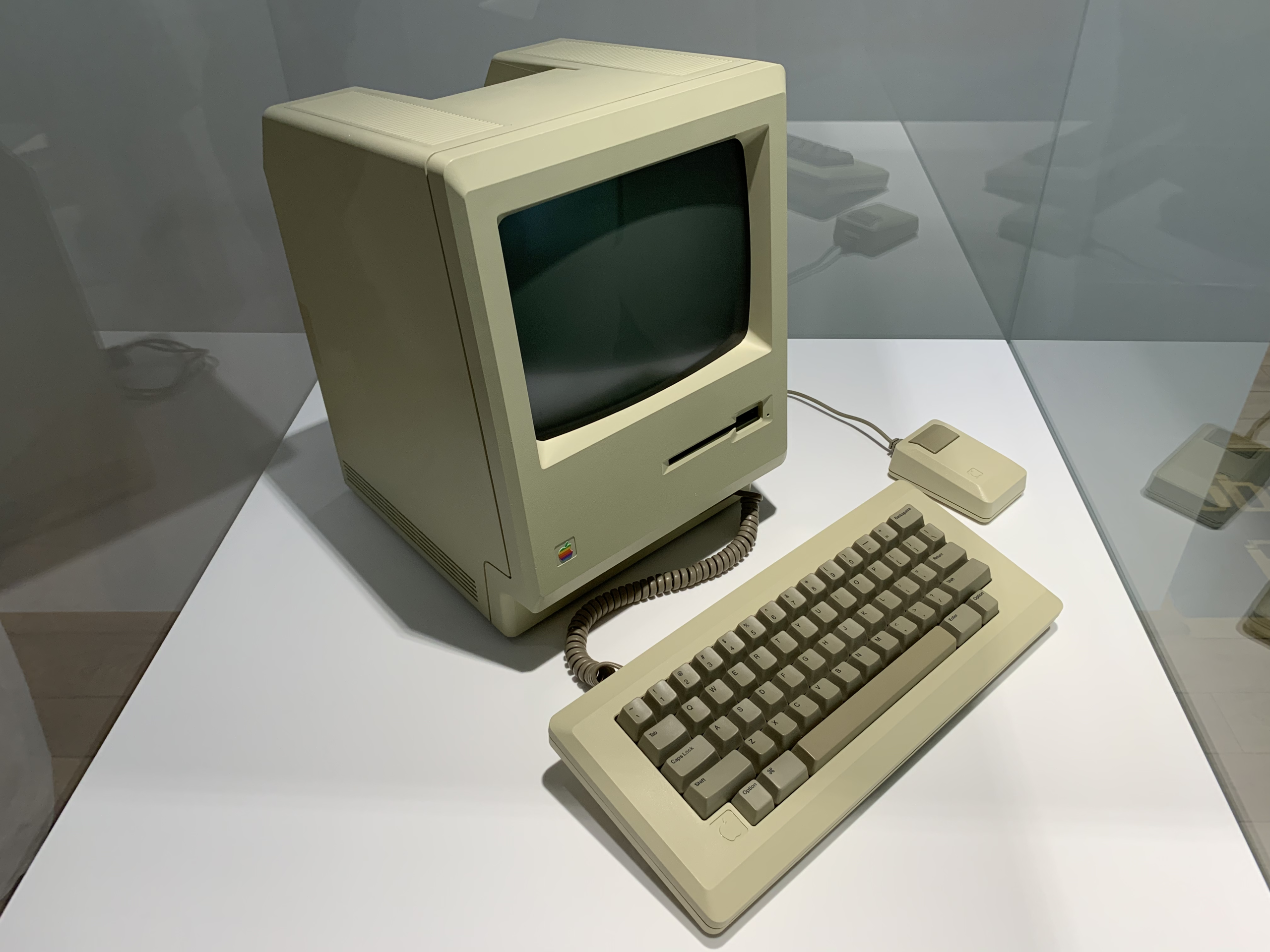
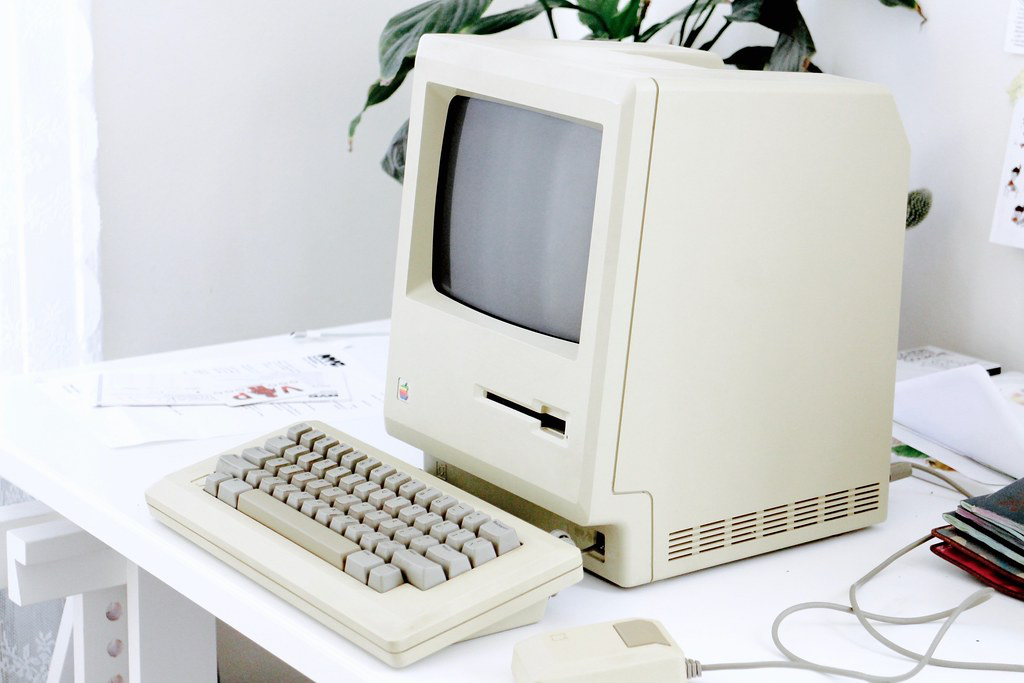
The original Macintosh 128K computer, introduced on January 24, 1984—the machine that “1984” promised would change everything.
The Plot: A Dystopian Rebellion
The commercial opens in a bleak, industrial dystopia rendered in cold blue and gray tones. Rows of androgynous, shaven-headed figures march in unison through a long tunnel, their movements monitored by telescreens—a direct nod to Orwell’s oppressive surveillance state. These minions sit in a vast hall, staring blankly at a massive screen where Big Brother (voiced and portrayed by David Graham) delivers a ranting speech.
In stark contrast, full-color shots introduce the heroine (Anya Major), an athletic young woman dressed in bright orange shorts, running shoes, a white tank top bearing a cubist sketch of the Macintosh computer, and sweatbands. Pursued by riot-geared agents of the Thought Police wielding nightsticks, she sprints toward the screen carrying a large brass-headed hammer
As Big Brother proclaims:
“Today, we celebrate the first glorious anniversary of the Information Purification Directives. We have created, for the first time in all history, a garden of pure ideology—where each worker may bloom, secure from the pests purveying contradictory truths. Our Unification of Thoughts is more powerful a weapon than any fleet or army on earth. We are one people, with one will, one resolve, one cause. Our enemies shall talk themselves to death, and we will bury them with their own confusion. We shall prevail!”
The heroine hurls the hammer at the screen just as he utters “we shall prevail!” The impact causes an explosion of light and smoke, shattering the image and leaving the drone-like audience in shocked silence.
The ad closes with a portentous voiceover over scrolling text in Apple’s signature Garamond font against a hazy backdrop:
“On January 24th, Apple Computer will introduce Macintosh. And you’ll see why 1984 won’t be like ‘1984.’”
The screen fades to black, revealing the iconic rainbow Apple logo.
Visually, the marching minions echo opening scenes from Fritz Lang’s 1927 film Metropolis, reinforcing themes of dehumanizing conformity.
Production and Development
Ridley Scott, fresh off directing the dystopian sci-fi classic Blade Runner in 1982, was brought on by agency producer Richard O’Neill. The high budget allowed for elaborate sets and hundreds of extras—skinhead punk extras who were paid just $25 per day.
Within Apple, the commercial sparked intense debate. Steve Jobs and then-CEO John Sculley loved it and purchased 90 seconds of Super Bowl airtime—one of the most expensive slots in television. However, when screened for the Apple Board of Directors in December 1983, the board universally disliked it. Sculley himself grew nervous and instructed Chiat\Day to sell back the time slots.
Steve Jobs remained steadfast in support. Co-founder Steve Wozniak, upon seeing it, offered to personally cover half the cost if needed. Chiat\Day sold 30 seconds of the booked time but kept the remaining 60-second slot, ensuring the full ad aired.
Intended Message and Interpretation
The heroine, in her Macintosh-branded tank top, symbolizes Apple’s new computer as a tool for individual empowerment and originality, breaking the chains of conformity. Creative director Lee Clow later explained that the ad portrayed the struggle for control of computer technology as the few against the many, with the Mac empowering users against soulless uniformity.
At the time, many interpreted Big Brother as representing IBM, the dominant “Big Blue” force in the personal computer market. In a 1983 Apple keynote, Steve Jobs himself framed the battle explicitly:
“It is now 1984. It appears IBM wants it all. Apple is perceived to be the only hope to offer IBM a run for its money. Dealers initially welcoming IBM with open arms now fear an IBM dominated and controlled future. They are increasingly turning back to Apple as the only force that can ensure their future freedom. IBM wants it all and is aiming its guns on its last obstacle to industry control: Apple. Will Big Blue dominate the entire computer industry? The entire information age? Was George Orwell right?”
By the 2000s, as Microsoft rose to dominance, viewers often reinterpreted Big Brother as Bill Gates’ empire, with IBM largely forgotten.
Reception, Awards, and Cultural Impact
The Super Bowl airing overwhelmed viewers, generating millions in free publicity as news programs rebroadcast it. Critics hailed it as a masterwork; Advertising Age named it the Commercial of the Decade for the 1980s, and it consistently tops lists of the most influential ads ever.
Notable awards include:
2007: Best Super Bowl Spot in the game’s 40-year history
2003: World Federation of Advertisers Hall of Fame Award
1999: TV Guide’s Number One Greatest Commercial of All Time
1995: Advertising Age’s Greatest Commercial
1995: Clio Awards Hall of Fame
1984: Clio Award and Grand Prix at the Cannes Lions International Advertising Festival
Its mystique grew from the single broadcast. In 1999’s docudrama Pirates of Silicon Valley, it featured prominently, with re-enactments bookending the film about the rise of Apple and Microsoft.
For the Macintosh’s 20th anniversary in 2004, Apple released an updated version on its website, digitally adding an iPod and white earbuds to the heroine. Commemorative posters were distributed, shifting the perceived villain to Microsoft.
Parodies and Lasting Influence
The ad’s imagery has inspired countless parodies. A Half-Life 2 commercial directly referenced it. In Futurama’s “Future Stock” episode, a parody promoted Planet Express. The Simpsons episode “Mypods and Boomsticks” featured Steve Jobs as Big Brother and the Comic Book Guy as the hammer-thrower.
“1984” remains a signature representation of Apple’s brand—rebellious, innovative, and human-centered. It not only launched the Macintosh but also marked a watershed moment in advertising, proving that bold storytelling could captivate the world in just 60 seconds. Many people also believe that it was the single point in Apple’s history that likely saved the company from the disastrous sales of the Lisa.