Category: Mac 68K

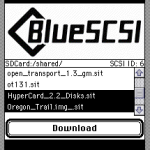
from our friends over at @BlueSCSI: BlueSCSI Transfer Util is a new 68k Macintosh app (OS6-9) that allows you to pull & put files directly from an SD card, no emulator required to get OregonTrail on your Mac Plus HD image! Give the Beta a try – let me know if you run into any issues: https://github.com/erichelgeson/BlueSCSI-Toolbox#bluescsi-transfer-utility


The Classic Mac Holy Bible (Filemaker) by Darrell Johnson is an application that provides a full-text searchable version of the Holy Bible for classic Macintosh computers. This application can run on Mac OS System 6 through Mac OS 9. It will run on a Mac Plus 68K all the way to the PowerMac G4. It even runs on Mac OS X with the Classic Environment. Version 1.0.0 of The Classic Mac Holy Bible can operate as a stand-alone classic Mac…

This morning, I saw a post from Tim Cook which caused me to take pause of what I was doing and reminisce a bit. 35 years ago, I was a young computer lab technician working in the college computer lab, supporting 100 Apple II systems on a Corvus Network. We began receiving new computers in a trickle so that the college could determine which computer they would be purchasing next to replace the aging Apple II and II plus systems….

While we normally do not talk about devices that are not Apple produced, this story of emulation caught our eye. Corbin Davenport has managed to get the Open Mini VMac III emulator to run on his Android Wear. While the sight of the old school Mac OS System 6.0.3 booting on an android device might be almost sacrilegious to the true Apple Fan, it is still pretty cool. However, at the same time, Corbin seems to be a bit finger…


Today’s Mac GUI Vault update brings enhanced file catalogs to over 70% of the 27,000 files currently in the Vault archive; that’s almost 19,000 files. These file catalogs are in the search database too, so you can use them to find the programs that you’re looking for. Some files, such as BinHex and BinSCII, will often have a description of the program in them; this description has also been copied out and is searchable. The following file formats are cataloged:…

The Android version of the Mini vMac Emulator has been updated to version 3.2.3, bringing it inline with the current version of the Mini vMac emulator for other platforms. The emulator is available in two versions, Macintosh Plus which is a free download and the Macintosh II, a $1.99 download from the Android Marketplace. You can also download the current source code for the emulator for free as well. Gil Osher has more information about the emulator on his website…
Jeff Dunham, the comedian and ventriloquist has been exposed as an avid Apple Computer collector. While his first hobby is collecting vintage automobiles, he also has a very extensive collection of older Macintosh and Apple computers from the 1980’s and 1990’s. His collection is currently numbered at 40 units, including the very first 1984 Macintosh. You can check out his collection in a photo expose done by USA today at: http://mediagallery.usatoday.com/Comedian+Jeff+Dunham+collects+cars+and+Apple+computers/G3448?csp=ipmpg
Mike Fort has created a version of Mini vMac which has LocalTalk support included. The support is through the serial port in Mini vMac. The beta of the release which is based on the version 3.1.3 of Mini vMac, is now downloadable from Mike Fort’s website at: http://web.me.com/mikefort/Mini_vMac_LT/index.html Mike is also working on a gateway solution which would allow traffic to go beyond the LAN. The beta requires that you be running Mac OS X version 7.x in 32-Bit Mode.
The latest version of the Mini vMac emulator has been released. The Paul Pratt managed project is now in version 3.2.3 of the emulator. The Mini vMac emulator emulates a 128K Macintosh and runs on a variety of platforms including Mac OS X. One requirement is that you have a 128K Macintosh ROM in file form. The operating system on the other hand is little problem as Apple, Inc. has released all Apple OSes through 7.5.5 as freeware. The Latest…
Everyone has probably had one or two programs over the years that they had during the early days of Macintosh that they wished there was a modern equivalent to. While most of us only dream of those retro packagers, one early mac user, Scott Baret wrote an interesting post on just such a list of items he wanted over at the 68K Macintosh Liberation Army Website about his list of items complete with his equivalent finds in the computing world…