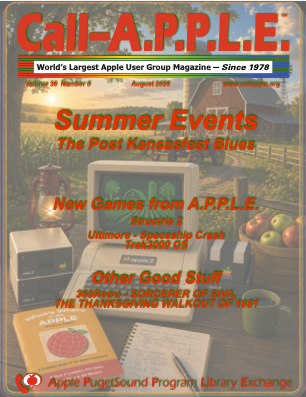
Over the years, I have watched the computer industry grow, from the little world that the 1960’s and 1970’s hobbyists had built, into the multi-trillion dollar industry it is today. In 1977, we had about three or four choices as to the type of computer that we could buy and really only one or two of those choices were realistic.
Today we have hundreds of choices of platform, style, size and capability. Yet, even though the 1990’s brought the computer explosion and proliferation of computers into each home, it has failed in one major area. True usability.
Although many companies tout their products as industry changing and far reaching, few if any ever really make the grade. How many people today continue to use their Apple II’s in spite of the machine being 25 years old? Now show me a PC, which is that old and I will show you a boat anchor at the bottom of a landfill. While Apple’s computers have enjoyed long life and survived several rumors of their deaths, the Apple II continues to hang on to its legacy.
Sure the Apple II is one machine that does not have the power of the latest 2 GHZ PC or the 1 GHz Macintosh, but it didn’t need that much power in the first place. Of course many of the graphical features weren’t as advanced; however the underlying features have not changed in 20 years. People still have to use spreadsheets and word processors, but what could be a reversion to the past, people have decided that they can do just as well with that old machine.
Another item that has led to the longer life of the older machine is the fact that most machines made these days tend to have more problems with the hardware. Also these machines are not repairable by the average Joe in the way that many of the older machines are.
Most Apple II users who knew their machines could not only program, but they could also maintain them and so many of the people who owned them hung onto them until they gave up the ghost. I see many kids selling their parent’s Apple II computers because they’re on Ebay. What little do these young folk realize about that machine that their parents refused to let go? It was a good machine, carried Apple into the 1990’s and carried many a young 1970’s programmer into the limelight. That lifetime devotion to a machine certainly can’t be found in many marriages and is found in even less techie types today.
Even the older Macintosh’s are enjoying a longer life with many newer software packages being developed for machines which Steve Jobs and Apple Computer Inc have declared as dead and no longer supported. However, this has long been one of the biggest mistakes of Apple.
Their products tend to enjoy a lifetime that seems to outlive the company’s desire to support it. Yet even though the latest and greatest machines surely are more powerful and have more features than any normal user would ever need.