Jim C. Warren Jr. was more than a technologist; he was a bridge between the free-spirited counterculture of the 1960s and the revolutionary dawn of personal computing in the 1970s. Born in the midst of the Great Depression and passing away in the era of ubiquitous digital connectivity, Warren’s life encapsulated the transformation of computers from monolithic machines to tools of empowerment for the masses. His contributions as an educator, entrepreneur, editor, and activist helped shape the Silicon Valley ethos, blending technical innovation with a fierce advocacy for privacy, free speech, and public access to information. This extensive article delves into his journey, drawing on archival records, personal anecdotes, and historical context to paint a complete portrait of a man who lived at the intersection of rebellion and revolution.
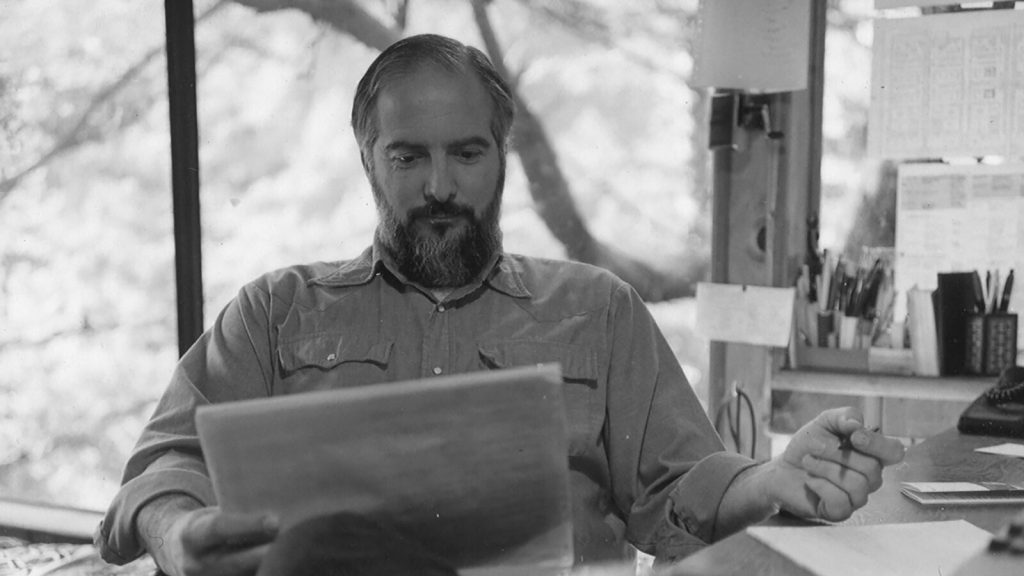
Jim C. Warren Jr. entered the world on July 20, 1936, in Oakland, California, as an only child. His early life, however, was rooted in the vast landscapes of Texas, where his family relocated during World War II. His father, Jim Warren Sr., served as a pilot for military transport aircraft, instilling in young Jim a sense of adventure and discipline amid the uncertainties of wartime America. Raised in San Antonio, Warren grew up in a modest environment that valued education and hard work, themes that would define his early career.
Early Years in Texas – Foundations of Curiosity and Education
From a young age, Warren displayed a keen intellect, particularly in mathematics. He graduated from Southwest Texas State University (now Texas State University) with a degree in mathematics and education. Eager to deepen his knowledge, he pursued a master’s degree in mathematics and statistics at the University of Texas, funded by a National Science Foundation grant. This period marked the beginning of his lifelong passion for teaching and innovation in education.
By his early twenties, Warren had already signed his first full-time teaching contract in 1956, earning a modest $2,987 annually. He quickly rose to prominence as a National Science Foundation Guest Lecturer, founding and directing Summer Mathematics Institutes at Our Lady of the Lake University in San Antonio. Between 1960 and 1962, as Chair of the Alamo District South Texas Council of Teachers of Mathematics, he earned national recognition for his innovative programs. These included weekly enrichment sessions for secondary school students and in-service training for teachers—all offered free of charge. Warren’s approach emphasized accessibility and creativity, foreshadowing his later efforts to democratize technology.
Yet, Texas in the 1950s and early 1960s was a conservative backdrop, and Warren’s restless spirit yearned for more. Inspired by a 1964 cover of Look magazine depicting the vibrant San Francisco Bay Area, he made the bold decision to relocate westward. This move would catapult him into a whirlwind of cultural and technological change.
The Move to California and Embrace of Counterculture
Arriving in the San Francisco Bay Area in 1964, Warren immersed himself in the burgeoning counterculture movement. He took a position teaching mathematics at the College of Notre Dame in Belmont, California, where he soon became department chairman. But academia alone couldn’t contain his energies. The 1960s were a time of social upheaval, and Warren dove headfirst into activism.
He participated in anti-war rallies against the Vietnam War and supported the Free Speech Movement at UC Berkeley. As general secretary of the Midpeninsula Free University, he helped create and edit its magazine, The Free You, which promoted alternative education and radical ideas. Warren’s personal life reflected this era’s ethos of liberation: he hosted legendary parties in his Woodside, California, home, involving free love, nudity, and experimentation with drugs. One such gathering was even filmed for a BBC documentary. However, a veiled article in the San Francisco Chronicle about these events led to controversy, forcing his resignation from the College of Notre Dame.
Warren’s counterculture involvement wasn’t mere hedonism; it was a philosophical stance against conformity. He embodied the hippie ideals of freedom and community, which he later infused into the tech world. A notable anecdote from this period highlights his unorthodox style: in 1996, during an interview for the PBS special Triumph of the Nerds, Warren suggested conducting the discussion nude in his hot tub to symbolize his journey from hippie to high-tech pioneer. The host, Robert X. Cringely, agreed, and they proceeded bare, discussing topics like ISDN versus Frame Relay amid bubbles for modesty. Warren later emailed about it, quipping that it maintained the “reputation of Silicon Valley/Californica types.” This blend of playfulness and profundity defined his personality—charismatic, irreverent, and always pushing boundaries.
Entering the World of Computing – From Mainframes to Minicomputers
The 1970s marked Warren’s pivot to computing, a field that aligned perfectly with his educational background and activist spirit. His first foray came as a computer programmer at Stanford Medical Center, building on skills acquired with IBM mainframes during his time at the University of Texas. Under the banner of Frelan Associates (a playful nod to “free land”), he worked as a freelance minicomputer programmer and consultant for Silicon Valley high-tech firms.
Warren’s leadership extended to professional organizations: he chaired regional chapters of the Association for Computing Machinery (ACM), including SIGPLAN, SIGMICRO, and the San Francisco Peninsula ACM. He also taught computer courses at Stanford University, San Jose State University, and San Francisco State University, spreading knowledge about emerging technologies.
This era saw the rise of microcomputers, and Warren was at the forefront. In 1977, he wrote the first invited, refereed survey of early personal computing for Computer magazine, providing a retrospective on the field’s evolution. His work bridged the gap between academic computing and the grassroots hobbyist movement, setting the stage for his most famous contribution.
Founding the West Coast Computer Faire – A Hub for Innovation
In 1977, Warren co-founded the West Coast Computer Faire, which quickly became the world’s largest public microcomputer convention for several years. As “Faire Chaircreature,” he organized eight iterations of the event, attracting thousands of enthusiasts, inventors, and entrepreneurs. The Faire was more than a trade show; it was a cultural phenomenon where counterculture met computing. Attendees could see early demonstrations of personal computers, software, and peripherals, fostering the DIY spirit that defined the PC revolution.
Warren complemented the Faire with the Silicon Gulch Gazette, an irregular tabloid on microcomputing that ran from February 1977 to January 1986. He also served as the founding editor of Dr. Dobb’s Journal of Computer Calisthenics & Orthodontia, the first magazine dedicated to microcomputer software, published by the nonprofit People’s Computer Company. These efforts democratized access to technical knowledge, empowering hobbyists to become creators.
In 1983, Warren sold the Faire to Prentice-Hall, marking the end of an era but securing his financial independence. The event’s legacy endures as a precursor to modern tech conferences like CES or SXSW, where innovation and community collide.
Editorial Ventures and Media Influence
Warren’s editorial prowess extended beyond the Faire. In 1978, he created and published Intelligent Machines Journal (IMJ), the first subscription-based news periodical on microcomputing, formatted as a tabloid. Sold to Patrick McGovern of International Data Group in 1979, it was renamed InfoWorld and became a cornerstone of tech journalism.
He founded short-lived but influential publications like DataCast magazine, focused on in-depth microcomputer tutorials, and the Video Initiative for self-paced videotape tutorials. From 1981 to 1982, Warren hosted the first two seasons of PBS’s Computer Chronicles, produced at KCSM-TV in San Mateo. This show brought computing concepts to a broad audience, demystifying technology during its nascent personal era.
In the 1990s, Warren continued writing columns: “Realizable Fantasies” for Microtimes (1990–2001), Government Access for Boardwatch (1994–1996), Public Access for Government Technology (1993–1996, 2000), and “Coastside Curmudgeon” for the Half Moon Bay Review (1994–1996). These pieces often critiqued the intersection of technology and policy, reflecting his growing activism.
Activism for Public Access and Privacy – Championing Digital Rights
Warren’s activism peaked in the 1990s, focusing on digital freedom and public access. In 1991, he founded and chaired the first Computers, Freedom and Privacy Conference, which ran for over 25 years and drew global attention to issues like data privacy and surveillance.
In 1993, he assisted Assemblywoman Debra Bowen in drafting Assembly Bill 1624, which made California the first state to provide fee-free Internet access to public legislative records starting January 1, 1994. Warren described the Internet as “the largest nonproprietary, nonprofit cooperative public computer network,” emphasizing its potential for transparency.
He served on advisory panels, including the California Secretary of State’s on Electronic Filings (1995–1996) and the Senate’s Task Force on Electronic Access to Public Records (1996–1997), advocating for low-cost online access. His efforts earned him prestigious awards: the Electronic Frontier Foundation Pioneer Award (1992), Hugh M. Hefner First Amendment Award (1994), James Madison Freedom-of-Information Award (1994), and John Dvorak Lifetime Achievement Award (1995).
Warren’s activism was rooted in his counterculture past, viewing technology as a tool for empowerment rather than control.
Political Engagements and Later Career
Warren’s influence extended to politics. In 1985, he was elected to the San Mateo County Community College District board of trustees (1986–1989). In 1986, he ran unsuccessfully for San Mateo County Supervisor against Anna Eshoo, protesting her representation of rural districts. From 1984 to 1986, he published the Peninsula Citizens’ Advocate, a tabloid on local rural issues.
From 1990 to 1995, Warren served on Autodesk’s board of directors, where he opposed software patents and chaired the CEO search committee that selected Carol Bartz. In his later years, he continued advocating for tech ethics, reflecting on the industry’s evolution in pieces like his 1991 Dr. Dobb’s Journal retrospective, “We, The People, In The Information Age.”
Legacy and Final Years
Jim Warren passed away on November 24, 2021, in Silverdale, Washington, from lung cancer at age 85. Survived by his wife, Malee Warren, he left a legacy as a pioneer who humanized technology. His papers are preserved at the Computer History Museum, ensuring his story inspires future generations.
Warren’s life reminds us that innovation thrives when fused with freedom. From Texas classrooms to Silicon Valley stages, he championed the idea that computers belong to the people, not just the powerful. In an age of digital divides, his vision remains profoundly relevant.